
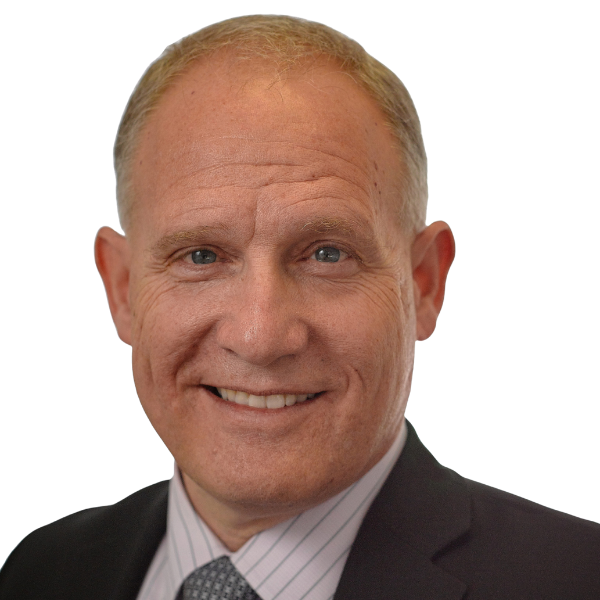
CEO
Whitman Advisory
Philip J. Whitman, CPA, is Founder and CEO of Whitman Advisory, a leading consulting, strategic advisory, and M&A firm serving the accounting profession. With more than 30 years of experience in public accounting and advisory services, Phil has become one of the most recognized voices in CPA firm growth, succession planning, strategic partnerships, private equity, and enterprise value creation.
Prior to founding Whitman Advisory, Phil served as Chief Operating Officer of a Top 25 CPA firm. Since launching Whitman Advisory in 2008, he has advised hundreds of CPA firms on growth strategy, leadership development, talent acquisition, mergers and acquisitions, succession planning, and strategic investor transactions.
Phil has been recognized by Inside Public Accounting as one of the profession's "10 Most Recommended Consultants" and was named by Accounting Today as one of the profession's "Top 100 Most Influential People in Accounting."
He is the author of Maximize! The CPA Firm Playbook for Value Creation and Multiple Expansion, co-founder of CPA Leadership Group, creator of ValueMyCPAFirm.com, and founder of several strategic initiatives focused on leadership development, enterprise value creation, succession planning, and growth within the accounting profession.
Phil serves as Co-Chair of Accounting Today's Private Equity Summit, where he works with industry leaders, investors, and firm executives to explore the rapidly evolving relationship between private equity, strategic investors, and the accounting profession.
A sought-after speaker, Phil is known for his practical insights, engaging storytelling, and unique perspective on the future of CPA firms.
Philip J. Whitman, CPA is on a mission to help CPA firm leaders build more valuable firms, develop stronger leaders, and create institutions that endure.
For decades, accounting firms relied on a predictable formula for growth and ownership transition: Partners funded the next generation, firms financed growth from operations, and independence was the default path forward. That model is increasingly under pressure.
Accounting Today’s 2025 research revealed that one in three firms now report needing capital, driven by rising technology and AI investments, acquisition opportunities, talent challenges, and the growing cost of partner succession. At the same time, aging ownership groups and rising firm valuations are making traditional partner buyout models harder to sustain, forcing firm leaders to reconsider how they fund growth, transition leadership, and remain competitive.
This opening session will explore the structural forces creating capital pressure across the profession and examine the strategic choices firms now face.
Our conference co-chairs sit down with Dan Hood for a candid discussion on the changing economics of firm ownership, the realities of succession planning in today’s market, and the funding models that will shape the next generation of accounting firms.
For decades, accounting firms relied on a predictable formula for growth and ownership transition: Partners funded the next generation, firms financed growth from operations, and independence was the default path forward. That model is increasingly under pressure.
Accounting Today’s 2025 research revealed that one in three firms now report needing capital, driven by rising technology and AI investments, acquisition opportunities, talent challenges, and the growing cost of partner succession. At the same time, aging ownership groups and rising firm valuations are making traditional partner buyout models harder to sustain, forcing firm leaders to reconsider how they fund growth, transition leadership, and remain competitive.
This opening session will explore the structural forces creating capital pressure across the profession and examine the strategic choices firms now face.
Our conference co-chairs sit down with Dan Hood for a candid discussion on the changing economics of firm ownership, the realities of succession planning in today’s market, and the funding models that will shape the next generation of accounting firms.
With private equity, ESOPs, strategic mergers, minority investments, permanent capital and new ownership structures reshaping the accounting profession, firm leaders have more options than ever. But having more options doesn’t necessarily make the decision any easier.
In this highly interactive session, Philip Whitman will put attendees in the managing partner’s chair of a hypothetical CPA firm and present a series of very different strategic alternatives for the same firm. Attendees will work through the economics, control, rollover equity, governance, culture, leadership, employee impact, future upside and other tradeoffs behind each option—and ultimately decide which path they would choose.
Building on Whitman’s popular “31 Flavors” framework, the session will show why two transactions with similar headline valuations can lead to very different outcomes—and why the highest valuation isn’t necessarily the best deal.
Attendees will leave with a practical framework for comparing their strategic alternatives and answering the question every leadership team should be asking before entering the market: What future are we actually trying to create?
As private equity interest in accounting firms accelerates, the path from initial outreach to a successful deal is proving more nuanced than many expect. From sourcing and valuation to partner alignment, governance, and post-deal integration, acquiring an accounting firm requires a deep understanding of both the business model and the people behind it.
In this interactive session, industry advisors Allan Koltin, Bob Lewis, and Phil Whitman—who field calls from PE firms every day—share what you need to know before pursuing a transaction. Each will offer a brief, focused perspective on what drives successful deals, common missteps, and how to effectively evaluate and engage with target firms.
The session will then open into a town hall-style discussion, giving PE firms the opportunity to ask candid questions and pressure-test their approach in real time. Whether you’re actively deploying capital or exploring the space, this is a chance to get unfiltered guidance from advisors who understand both sides of the table. Moderated by Accounting Today.
Note: Space is limited to encourage open, high-value discussion.
Private equity has already reshaped the accounting profession—but what happens next? In this interactive town hall, industry leaders will explore how capital, consolidation, technology, and talent pressures are transforming firm ownership and operations. Will private equity become the dominant ownership model? Can independent firms continue to compete and thrive? And what will the next generation of accounting firms look like five to ten years from now? Join this forward-looking discussion on the forces shaping the future of the profession and what firm leaders should be doing today to prepare for tomorrow.
The path to taking on private equity can take many forms; in this session, accounting firm leaders and industry experts share the main milestones on that path, including the sort of discussions firms should be having internally, the critical questions they need to ask themselves, how to bring together a partner group on a final decision, the due diligence they should be doing on their PE partners.
Our co-chairs return to the stage to wrap up the event, highlighting the most important takeaways from the previous two days, offering their key insights, and taking questions from the audience.
In this session, a panel of top experts and deal-makers (including our conference co-chairs) will survey the current state of play in the accounting profession — covering everything from what types of firms can expect to be able to make a PE deal and how those deals are changing, and how that is impacting the broader profession, laying a groundwork for the more granular discussions to come on Day 2.
Veteran deal-maker, Phil Whitman, will take accounting firm leaders through the structure of a “typical” private equity deal to discuss important issues like price, rollover equity, levels of control, the “scrape” and how partner compensation is handled after a deal, and much more. The first part of the session will deal with smaller firms, and the second part with midsized and larger deals.
*Must attend both sessions to qualify for the 1 hour of CPE credit.